
The SOS Signals: Decoding the Visual Language of Your Eyes
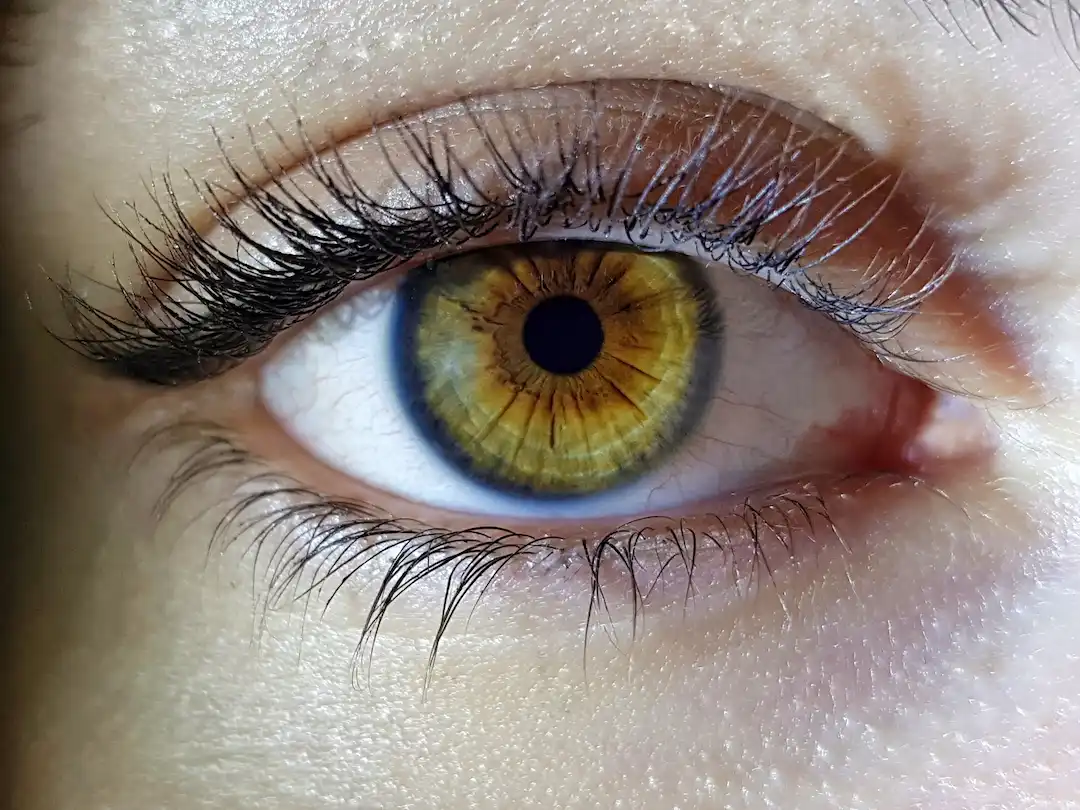
(Flashes, Fogs, and Halos)
The human eye is often compared to a camera, but it is actually more like a highly advanced biological warning system. Long before pain sets in, and often before you realize you are losing your vision, your eyes start sending signals.
They speak a visual language. They send messages in the form of Halos around streetlights. They send warnings through Flashes of lightning in a dark room. They scream for help through Wavy Lines on a spreadsheet or a sudden Fog that won’t blink away.
The problem is, most of us don’t speak this language. We dismiss a floating black spot as “just a speck of dust.” We dismiss difficulty driving at night as “just getting old.”
At Navjyoti Superspeciality Eye Hospital, we believe that an educated patient is a safer patient. In this comprehensive guide, we are going to decode these visual phenomena. We will explore the specific symptoms caused by the Lens (Cataract) and the Retina, helping you distinguish between a minor annoyance and a medical emergency.
1. The Fog and The Fade: Understanding Loss of Contrast
The most common complaint we hear in Patna is, “Doctor, my vision is blurry.” But “blurry” is a vague word. To a specialist, the type of blur tells us exactly where the problem lies.
The “Dirty Window” Effect (Cataract)
A cataract is the clouding of the eye’s natural lens. Think of looking through a window that has been frosted over or smeared with grease.
- The Symptom: Cataract blur is usually constant. It doesn’t come and go with blinking.
- The Color Thief: One of the most subtle signs of a cataract is the desaturation of colors. The lens turns yellow/brown as it ages, acting like a built-in “sepia” filter. Patients often don’t realize how vibrant the world is until after surgery. A blue shirt might look grey; a white wall might look cream.
- The “Second Sight” Phenomenon: Surprisingly, some patients with developing cataracts suddenly find they can read without their glasses for a few months. This is called “Myopic Shift.” As the lens hardens, it swells and changes the refractive power of the eye. While it feels like a miracle, it is actually a sign that the cataract is progressing rapidly.
The “Blank Spot” Effect (Retina)
Retinal blur is different. If the macula (the center of the retina) is damaged due to Diabetes or Age-Related Macular Degeneration (AMD), the blur isn’t general—it is specific.
- The Symptom: You might see the clock on the wall clearly, but the numbers in the center are missing or smudged. You might see a face, but the nose and mouth are a grey blob. This is a “Central Scotoma.”
- Why it happens: The retina is like the film in the camera. If there is a scratch on the center of the film, no matter how clean the lens is, that part of the photo will always be missing.
The Takeaway: If the whole world looks dim and yellow, think Cataract. If specific parts of your vision are missing or greyed out, think Retina.
2. The Light Show: Flashes and Floaters
This is perhaps the most frightening category of symptoms for patients. You are sitting in your living room, and suddenly you see a streak of light, like a camera flash or a lightning bolt, in your side vision. Or, you notice a swarm of black dots drifting across your eye.
The Floaters (Muscae Volitantes)
Floaters look like cobwebs, worms, or little black dots that drift when you move your eyes.
- The Cause: The vitreous humor (the jelly filling your eye) shrinks and liquefies with age. Tiny clumps of collagen fibers cast shadows on the retina.
- When it’s Normal: Seeing one or two floaters occasionally is common and usually harmless.
- The Danger Zone: If you experience a sudden shower of floaters (like someone shook a pepper shaker in your eye), this is a red flag. It could indicate a vitreous hemorrhage (bleeding inside the eye), often caused by diabetic retinopathy or a retinal tear.
The Photopsia (Flashes)
Flashes are purely a retinal symptom. The retina does not have pain receptors; it only has light receptors. When something pulls on the retina physically, the brain interprets that traction as a flash of light.
- The Mechanics: As the vitreous jelly shrinks, it can pull away from the retina (Posterior Vitreous Detachment). If it pulls too hard, it can tear the retina.
- The Urgency: A flash of light is the retina saying, “I am being tugged!” If this is followed by a “curtain” falling over your vision, it suggests the retina has detached. This is a medical emergency requiring immediate surgery at a hospital like Navjyoti.
The Myth: Many people believe flashes are caused by high blood pressure or stress. While severe hypertension can affect eyes, flashes are almost always a mechanical issue inside the eye requiring a dilated exam.
3. The Glare and The Halo: Night Driving Nightmares
Have you stopped driving at night because the headlights of oncoming cars blind you? Do you see rainbow-colored rings around streetlights? These are classic “Aberration” symptoms.
Scattering of Light (Cataract)
A healthy lens is clear and allows light to pass through in a straight line. A cataract is cloudy and irregular. When light hits a cataract, it scatters in all directions (diffraction).
- The Starburst: Instead of seeing a round streetlight, you see a starburst pattern with long streaks of light.
- The Halo: Fluid entering the lens (hydrated cataract) acts like a prism, breaking light into its spectral colors. This creates a rainbow halo around bulbs.
- Impact: This glare can reduce a driver’s reaction time significantly. At Navjyoti, we often recommend cataract surgery for patients specifically because of night driving safety, even if their day vision is acceptable.
Glare in Retinal Patients
Interestingly, patients who have had retinal treatments (like Pan-Retinal Photocoagulation laser for diabetes) may also experience reduced night vision. The retina needs time to regenerate photopigments after exposure to bright light. If the retina is damaged, this regeneration is slow, leading to “Night Blindness” (Nyctalopia).
The Differentiation: If the glare is painful and makes you squint physically, it is often a Lens/Cataract issue. If you simply cannot see anything in low light (like entering a cinema hall), it is more likely a Retinal/Rod cell issue.
4. The Funhouse Mirror: Metamorphopsia (Distortion)
This is one of the most specific and serious symptoms in ophthalmology.
Imagine looking at a bathroom tile grid. All the lines should be straight. Now, imagine those lines look wavy, bent, or pinched in the middle.
This is never a cataract symptom. This is purely a Macular (Retina) symptom.
The Mechanics of Distortion
The macula must lie perfectly flat against the back of the eye to produce a straight image.
- Macular Edema: If fluid leaks under the macula (due to Diabetes or Vein Occlusion), the retina swells up like a blister. The photoreceptors are pushed out of alignment. Straight lines appear bent.
- Epiretinal Membrane: Sometimes, a layer of scar tissue grows over the retina, wrinkling it like a piece of cellophane.
- Macular Hole: If the retina stretches too thin and breaks in the center, objects might look distorted or vanish entirely.
The Amsler Grid Test
At Navjyoti, we teach our retinal patients to use an “Amsler Grid” (a simple graph paper chart) at home.
- How to do it: Cover one eye. Look at the center dot.
- What to look for: If any lines look curvy or missing, you need to see a Retina Specialist immediately. Early detection of Metamorphopsia often allows us to save vision using Anti-VEGF injections. If ignored, the distortion can become permanent.
5. The Transient Blindness: “Amaurosis Fugax”
Sometimes, the eye gives a warning that has nothing to do with the eye itself, but with the heart or brain.
Amaurosis Fugax is a temporary loss of vision in one eye, lasting from a few seconds to a few minutes. Patients describe it as a “shutter coming down” and then going back up.
- The Cause: This is often caused by a tiny clot or piece of plaque breaking off from the carotid artery (in the neck) and briefly blocking the central retinal artery. It is essentially a “mini-stroke” of the eye.
- The Critical Action: If you experience this, you don’t just need an eye doctor; you need a cardiovascular workup. The eye is the only place in the body where we can see bare blood vessels without cutting the skin.
- Vein Occlusions: Sometimes the blockage is permanent. This is a “Retinal Vein Occlusion” (Eye Stroke). It causes sudden, painless loss of vision. While cataract loss is slow (months/years), vascular loss is instant.
6. The Silent Threat: When there are NO Symptoms
This is the most dangerous category.
The eye is incredibly resilient. The brain is incredibly adaptive.
- Binocular Compensation: You have two eyes. If one eye develops a cataract or a retinal bleed, the other eye works overtime to compensate. You might walk around for months effectively using only one eye, not realizing the depth of the problem until you accidentally cover your “good eye.”
- The Periphery: Glaucoma and early Diabetic Retinopathy affect the side vision first. Because our central vision remains sharp, we think we are fine. By the time these diseases affect the center vision, significant irreversible damage has occurred.
This is why “Symptom-Based” visits are not enough. Routine screenings at a Superspeciality center like Navjyoti are vital because they catch the silence before the storm.
7. The Psychological Impact of Visual Disturbances
We cannot discuss these symptoms without acknowledging the mental toll they take.
Living with constant floaters can cause anxiety. Living with cataracts that make faces look blurry can lead to social isolation—grandparents stop playing with grandchildren because they can’t see their expressions.
Fear of falling due to poor depth perception keeps many elderly people housebound.
At Navjyoti, we view Cataract and Retina surgery not just as “repair work,” but as Lifestyle Restoration.
- Removing a cataract doesn’t just improve acuity; it restores confidence in walking, driving, and socializing.
- Repairing a retina doesn’t just fix a tear; it removes the constant anxiety of going blind.
8. Navjyoti’s Diagnostic Arsenal: How We Read the Signals
When you come to Navjyoti with a complaint like “I see flashes” or “I see halos,” we don’t guess. We use advanced technology to visualize the anatomy behind the symptom.
- For Glare/Halos (Cataract): Slit Lamp Biomicroscopy + Aberrometry
- For Wavy Lines/Distortion (Retina): OCT (Optical Coherence Tomography)
- For Flashes/Floaters: Dilated Fundus Exam (Indirect Ophthalmoscopy)
- For Vascular Issues: Fundus Fluorescein Angiography (FFA)
9. Conclusion: Don’t Ignore the Messenger
Your eyes are trying to tell you something.
- The Halo is telling you the lens is changing.
- The Wavy Line is telling you the macula is swollen.
- The Flash is telling you the retina is under stress.
- The Curtain is telling you to run, not walk, to the hospital.
Modern ophthalmology has solutions for almost all these signals if they are caught in time.
Listen to your eyes.
If you are experiencing any of these phenomena—whether it’s a subtle fog or a sudden flash—Dr. Kumar Parmanand and the expert team at Navjyoti Superspeciality Eye Hospital are here to decode the signal and restore the picture.
Summary Checklist: When to Visit Navjyoti
| Symptom | Likely Cause | Urgency |
|---|---|---|
| Gradual blur, yellow tint, halos at night | Cataract | Routine Appt (Within 1-2 weeks) |
| Wavy lines, distorted faces, central grey spot | Macular (Retina) Issue | Urgent (Within 2-3 days) |
| Sudden shower of floaters + Flashes of light | Retinal Tear/Detachment | EMERGENCY (Immediately) |
| Sudden curtain/shadow over vision | Retinal Detachment | EMERGENCY (Immediately) |
| Painless, sudden loss of vision in one eye | Vascular Occlusion | EMERGENCY (Immediately) |
| Redness, pain, light sensitivity | Infection/Uveitis | Urgent (Same Day) |
Disclaimer: This blog is for educational purposes only. Visual symptoms can have multiple causes. Only a comprehensive eye exam can provide an accurate diagnosis.